



Virtual Address vs. Real Worksite: Why the Distinction Matters on an H-1B Filing

The rise of remote work has fundamentally changed how companies structure their operations, but U.S. immigration law hasn't kept pace. If you're an employer sponsoring an H-1B worker, the difference between a virtual address and a real worksite on your petition isn't a technicality: it's a compliance minefield that can result in denied petitions, revoked visas, and serious financial penalties. Understanding why this distinction matters on an H-1B filing is one of the most overlooked yet critical aspects of the sponsorship process.
Too many employers, especially startups and companies using flexible office arrangements, assume that a virtual mailbox or a rarely-used coworking membership will suffice as the address on their petition. It won't. This is one of the most common and most costly misconceptions in H-1B sponsorship: a mail-forwarding service is not, and has never been, a "place of employment" under DOL regulations. USCIS and the Department of Labor care deeply about where the sponsored worker will actually sit, log in, and perform their daily duties. Getting this wrong doesn't just risk a Request for Evidence (RFE): it can unravel the entire petition. Here's what the requirement actually is, and how a real workspace fits it.
A virtual address - a mail-forwarding or registered-agent service with no dedicated workspace - does not qualify as a "place of employment" under 20 CFR § 655.715, and listing one on an H-1B petition or LCA is a common trigger for RFEs, denials, or post-approval site-visit failures. The actual worksite is wherever the beneficiary physically performs their duties: an office, a client site, or a documented home office. Penalties for address misrepresentation can run up to $16,000 per violation as of 2026, on top of back wages and possible debarment from future H-1B filings. This article explains the requirement - it is not a substitute for legal advice, and any specific filing decision should go through an immigration attorney.
Defining Worksite Locations in the Modern H-1B Landscape
What counts as a "worksite" under H-1B rules?
The worksite is the specific physical location where the beneficiary actually performs their job duties - not the company's headquarters, its mailing address, or wherever looks best on paper. The concept sounds straightforward until you try to pin it down for a remote-first company or a consulting firm that deploys workers to client locations. USCIS regulations and DOL guidance both hinge on the physical location where work is performed, but the modern reality of distributed teams makes this definition slippery.
The tension is real: a company might be incorporated in Delaware, maintain a virtual address in Manhattan for prestige, and have its H-1B beneficiary working from a home office in Edison, New Jersey. Each of those locations carries different legal weight, and listing the wrong one on the petition creates problems that are expensive to fix after the fact.
The Legal Definition of a 'Place of Employment'
How does the DOL define "place of employment" for LCA purposes?
Under DOL regulations (20 CFR 655.715), the "place of employment" is the physical location where work is actually performed - full stop. For a traditional office setup, this is simple: it's the office address. For third-party placements, the worksite is the client's location. For remote workers, it's the beneficiary's home.
The distinction matters because the Labor Condition Application (LCA) must correspond to the actual worksite. Filing an LCA based on a prestigious Manhattan address when the worker actually performs duties in a New Jersey suburb means the prevailing wage determination, the posting requirements, and the entire foundation of the H-1B petition are built on incorrect information.
Virtual Registered Addresses vs. Physical Office Spaces
Does a virtual office or registered agent address count as a worksite?
No. A virtual address is a service that provides a business with a mailing address, sometimes including mail forwarding and a receptionist service, without any dedicated physical workspace - and that absence of a dedicated workspace is precisely what disqualifies it as a worksite. Companies use virtual addresses for legitimate reasons: maintaining a presence in a specific market, receiving legal correspondence, or projecting a professional image. None of those reasons make it a place where work happens.
This is where the misconception causes real damage. It's common for employers, particularly newer companies without in-house immigration expertise, to assume that having any verifiable business address is enough to satisfy USCIS. It isn't. USCIS adjudicators know the difference between a mailbox service and a place where someone actually works. The key test: can the beneficiary show up at that address on a Monday morning and do their job? If the answer is no, it's not a valid worksite for H-1B purposes - regardless of how legitimate the address looks on a lease or business registration.
A physical office space, whether it's a traditional lease, a dedicated desk in a coworking facility, or a client's office, qualifies as a worksite because someone can actually perform work there.
The Risks of Mismatched Addresses on Form ETA-9035
What happens if the address on an H-1B petition doesn't match the actual worksite?
Form ETA-9035, the LCA itself, requires the employer to attest under penalty of perjury that the information is accurate. A mismatched address between a virtual address listed and the actual worksite constitutes a material misrepresentation, even if it was unintentional.
The consequences escalate quickly. A DOL investigation triggered by a complaint or random audit can result in back-wage obligations calculated from the correct prevailing wage for the actual worksite. Penalties of up to $16,000 per violation per worker are on the table as of 2026. In severe cases, the employer can be debarred from filing future LCAs for a period of years, effectively killing their ability to sponsor any H-1B workers.
Even if no investigation occurs, USCIS may notice the discrepancy during adjudication. An RFE asking the employer to explain why the listed worksite appears to be a virtual office adds months of delay and attorney fees, and the explanation rarely satisfies the examiner without filing a corrected LCA.
USCIS Site Visits and the Verification Process
How does USCIS verify that a worksite is real?
Since 2017, USCIS has operated the Fraud Detection and National Security Directorate (FDNS), which conducts unannounced site visits to H-1B employer locations - verifying that the sponsored worker actually works where the petition says they work, doing the job described in the petition. These visits increased significantly after 2020, and by 2026, they've become a routine part of H-1B enforcement, particularly for IT staffing companies and small employers.
What Happens When an Officer Visits a Virtual Address
What happens if a USCIS officer visits an address and finds no one there?
This almost always triggers a Notice of Intent to Deny (NOID) or a Notice of Intent to Revoke (NOIR) if the petition was already approved. Picture the scenario: an FDNS officer arrives at the address listed on the H-1B petition, walks into a shared reception area, asks for the beneficiary by name, and the receptionist has never heard of them. Or the address turns out to be a mailbox service. The officer documents the visit, and a report goes back to the adjudicating office.
The employer then has the burden of proving that a bona fide job exists and that the worksite information was not fraudulent. It's an uphill battle, and even with strong evidence, the damage to the employer's credibility with USCIS is lasting.
Some employers try to maintain a token physical presence at a coworking space, thinking a hot-desk reservation covers them. USCIS officers aren't fooled by an empty desk with no computer, no personal items, and no coworkers who recognize the beneficiary. The workspace needs to look like someone actually works there because someone should actually be working there. This is not a guide to appearing compliant - it's a description of why genuine, verifiable workspace is the only thing that actually holds up.
Notice of Posting Requirements for Multiple Locations
Where does the LCA notice need to be posted?
The LCA posting requirement mandates that employers post notice of the H-1B filing at the worksite for 10 consecutive business days. For a traditional office, this means posting a notice on a bulletin board. For a remote worker, the employer must provide the notice electronically, typically via email or an intranet posting accessible to the beneficiary and their coworkers.
When a worker splits time between multiple locations, each location that qualifies as a worksite under the "short-term placement" rules needs its own posting. If the beneficiary works three days a week in a Manhattan office and two days from home in Hoboken, both locations may require LCA coverage depending on the duration and regularity of the arrangement.
The short-term placement exception (up to 30 days, extendable to 60 in some cases) can provide relief for occasional travel to secondary locations. But this exception has strict requirements: the worker's tax home must remain at the primary worksite, and the employer must continue to pay at least the prevailing wage for the primary location or the secondary location, whichever is higher.
Best Practices for Accurate Address Documentation
What should employers do to keep worksite addresses compliant?
Getting the address right from the start is far cheaper than fixing it later. These practices consistently prevent problems:
- List the actual physical location where the beneficiary will perform work on both the LCA and the I-129 petition.
- Maintain a dedicated workspace for each H-1B beneficiary at the listed worksite, whether that's a traditional office, a dedicated coworking desk, or a properly documented home office.
- Keep records that prove the beneficiary works at the listed location: badge-in logs, VPN connection records, project management timestamps, or IT asset tracking showing equipment at the address.
- Establish an internal process for tracking H-1B worker relocations, with HR, immigration counsel, and the worker's manager all in the loop when a move is being considered.
- Conduct an annual audit of all H-1B worksite addresses against actual work arrangements. Companies change, people move, and what was accurate 18 months ago may not reflect reality today.
- If you use a coworking space as your business address, make sure there's a dedicated, identifiable workspace there - not just mail service - and be prepared to demonstrate to an FDNS officer that the space is actively used.
None of this replaces legal counsel. Worksite classification, MSA determinations, and material-change assessments are fact-specific, and the cost of getting them wrong is high enough that every filing decision involving a remote, hybrid, or ambiguous worksite should go through an immigration attorney before submission.
The distinction between a virtual address and a real worksite on an H-1B filing isn't abstract legal theory. It's the difference between a smooth approval and a compliance nightmare that can cost tens of thousands of dollars and jeopardize a worker's ability to remain in the United States. Treat the worksite address as one of the most important data points on the entire petition, because USCIS certainly does.
For employers in the New Jersey and New York metro area who need a genuine, verifiable workspace rather than a paper address, WorkSocial offers professional office spaces in Jersey City with dedicated desks, real infrastructure, and a physical presence an FDNS officer can actually confirm - which is exactly what a mail-forwarding setup can't offer. Book your office space that serves as a real worksite from day one, and talk to your immigration attorney about how it fits into your filing.
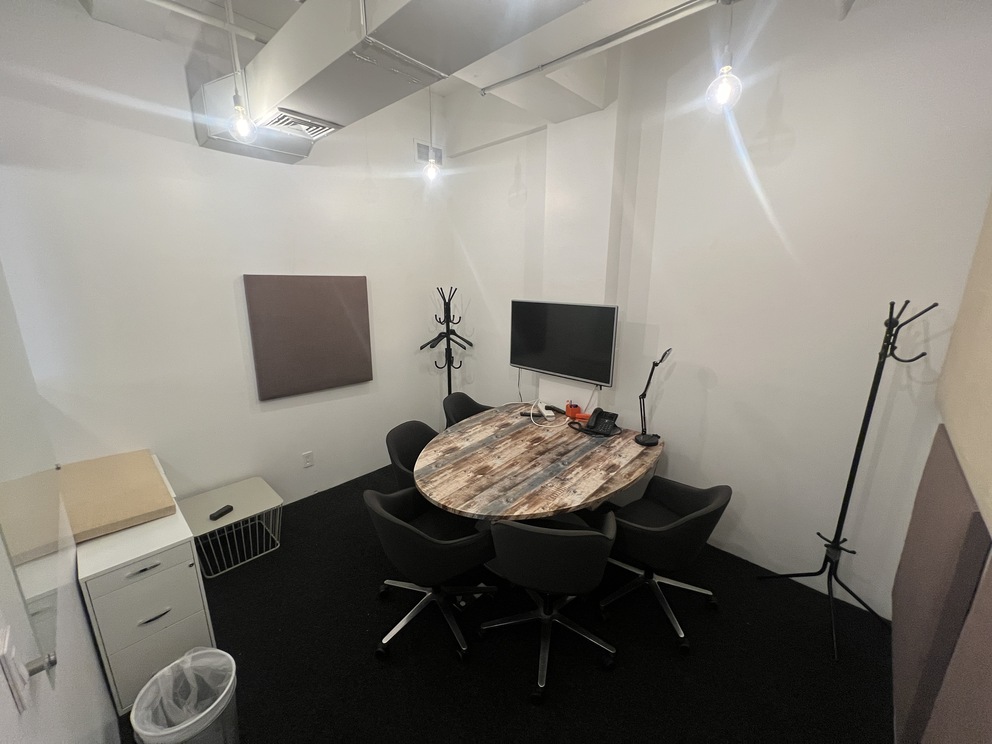
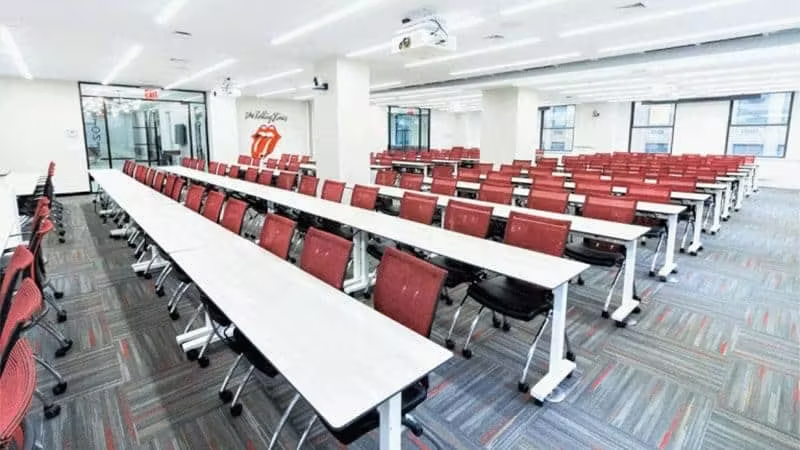
A private office in Jersey City with a dedicated desk and real infrastructure: a physical workspace, not a mail-forwarding address.


.avif)













.avif)




.avif)
.avif)
.avif)
.avif)
Frequently Asked Questions
No. A virtual address provides mail service but no dedicated workspace, and DOL regulations define the place of employment as the physical location where work is actually performed. Listing a virtual address as the worksite is a common cause of RFEs, denials, and failed site visits.
Under 20 CFR § 655.715, it's the specific physical location where the beneficiary actually performs their job duties - not the company's headquarters, mailing address, or registered business address.
It typically triggers a Notice of Intent to Deny or Notice of Intent to Revoke, after which the employer bears the burden of proving the job and worksite were legitimate - an uphill process even with strong evidence.
Penalties can run up to $16,000 per violation per worker as of 2026, on top of back-wage obligations and, in severe cases, debarment from filing future LCAs.
Often, yes. A change in MSA is typically a material change requiring an amended petition and new LCA before the worker begins at the new location - filed proactively, not after the fact.
Only if there's a genuinely dedicated, identifiable workspace actively used by the beneficiary - not just a mailing address or an occasional hot-desk reservation. USCIS officers are trained to distinguish real usage from a token presence.
Yes. Worksite classification and material-change determinations are fact-specific and carry significant financial and immigration-status risk, so filing decisions involving remote, hybrid, or ambiguous locations should go through immigration counsel before submission.