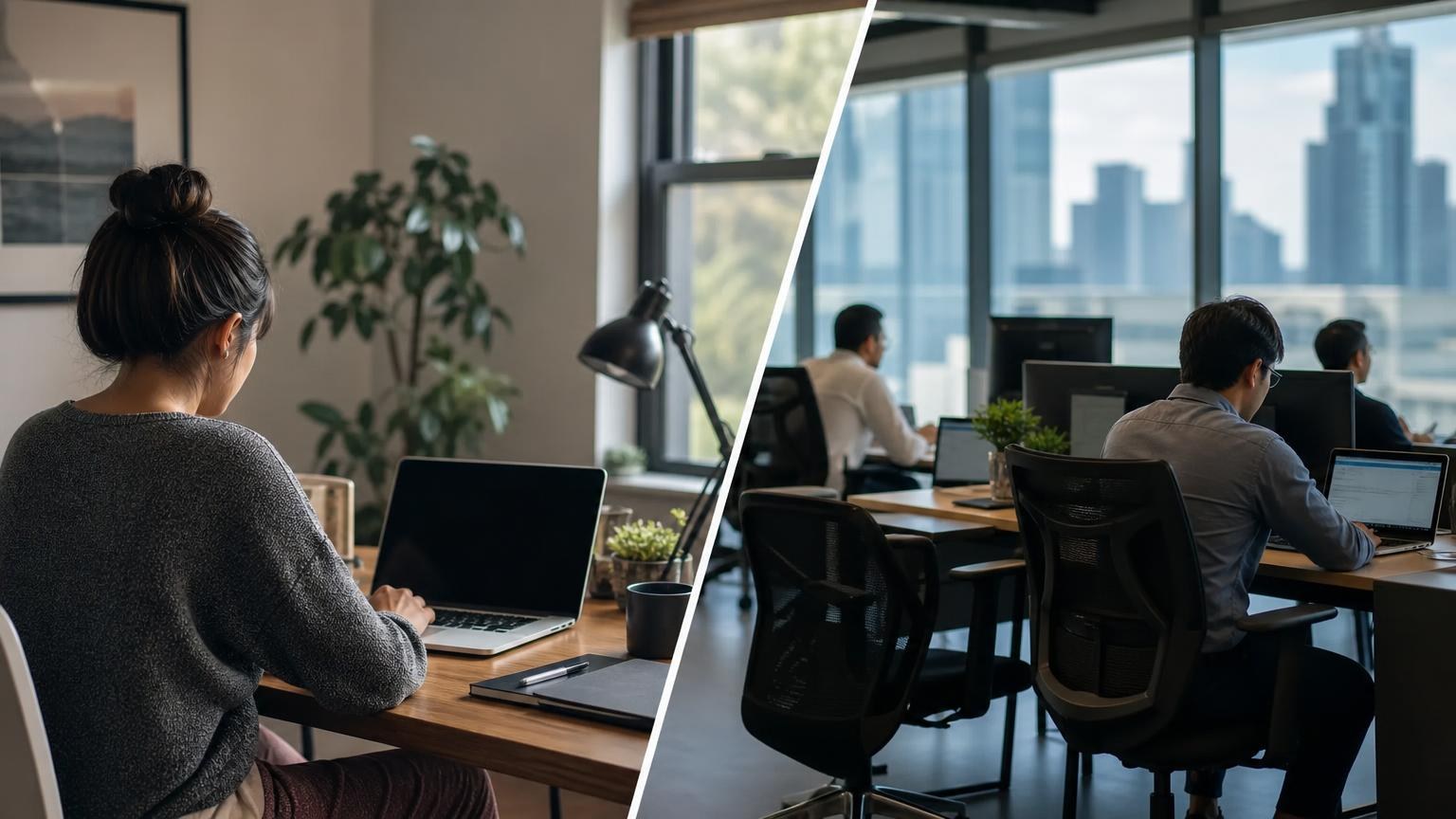


One Day. No Commitment. Here's What Happens When Your Team Works from a Real Office Again.

Can a single day in a physical office change how your remote team works?
Surprisingly, yes. Not through mandates or policy shifts—but through a low-pressure, high-impact experiment that reveals what digital collaboration often misses.
This article breaks down what actually happens when distributed teams spend just one day working together in person, why the results are consistently powerful, and how to use those insights to design a smarter hybrid strategy.
Why a Single Office Day Works
Most return-to-office strategies fail not because employees dislike offices—but because they fear losing flexibility. A mandated hybrid schedule often feels like a slow rollback of remote work benefits.
A single, optional office day removes that tension entirely.
- No long-term commitment
- No policy changes
- No pressure
Instead, it becomes a low-stakes experiment—and that changes behavior. People show up curious, not defensive. They engage more openly, observe more carefully, and generate more honest feedback.
Key insight: When the stakes are low, participation is genuine—and that’s where the value comes from.
The Psychology Behind “Trial Run” Collaboration
Framing matters. Calling it an experiment rather than a return activates psychological safety—the #1 predictor of high-performing teams.
In a trial environment:
- People share ideas more freely
- “Small” questions finally get asked
- Conversations feel natural, not performative
Without long-term consequences, teams become more authentic. And that authenticity leads to better collaboration—fast.
What Changes When Teams Work Face-to-Face
1. Faster Problem Solving
Issues that drag on in Slack threads for days often get resolved in minutes.
Why?
- Real-time feedback
- Fewer misunderstandings
- Immediate clarification
2. The Return of Spontaneous Collaboration
Remote work is optimized for planned interaction. Offices enable unplanned interaction—which is where innovation often starts.
These moments include:
- Quick desk-side conversations
- Overheard context that sparks ideas
- Casual check-ins that unlock blockers
These “micro-interactions” are nearly impossible to replicate online.
The Limits of Scheduled Digital Communication
Video calls are structured:
- Fixed agendas
- Time constraints
- Performance pressure
That structure filters out:
- Half-formed ideas
- Quick clarifications
- Creative tangents
In contrast, physical spaces allow ideas to emerge organically—without needing a calendar invite.
Why Whiteboards Still Beat Digital Tools
Even with advanced collaboration software, in-person brainstorming consistently outperforms virtual sessions.
In physical environments:
- Teams think more visually
- Ideas evolve in real time
- Participation feels more natural
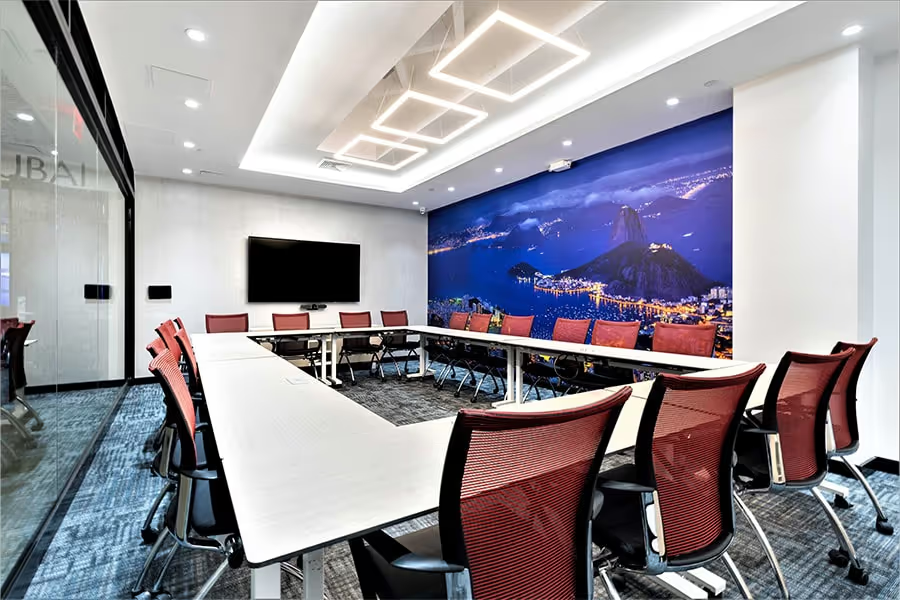
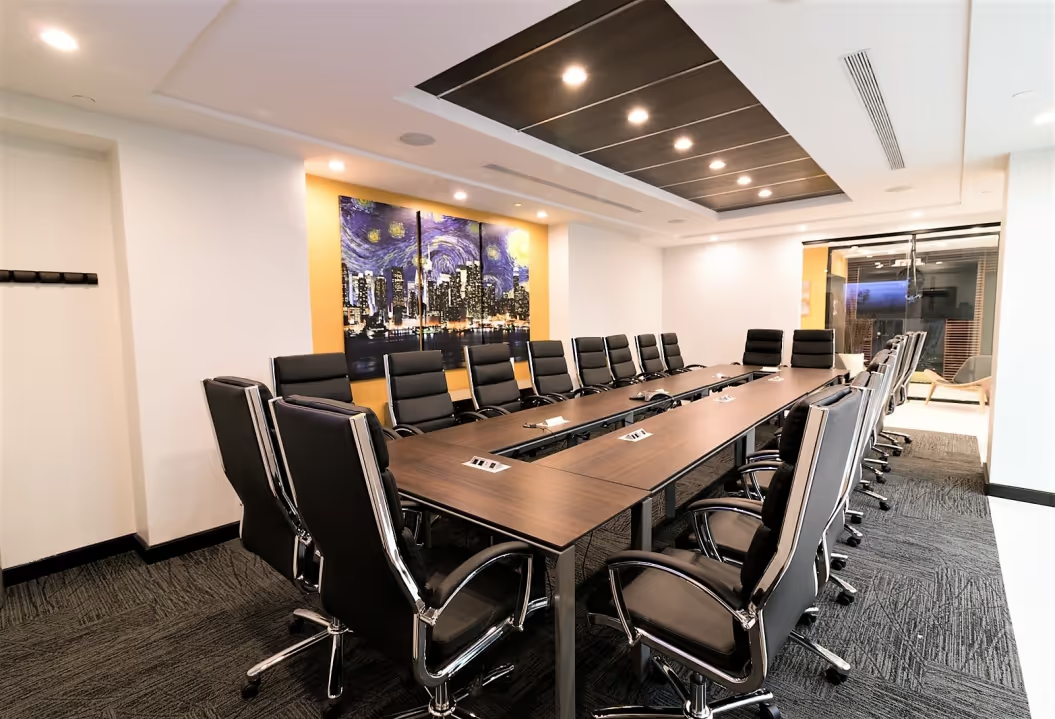
Purpose-built workspaces amplify this effect. Rooms with writable walls, movable furniture, and proper acoustic treatment let teams reconfigure their environment to match the problem they're solving.
The result? More creative output and faster alignment.
Rebuilding Social Capital
Remote teams often underestimate the importance of social capital - the trust and rapport that make collaboration smooth.
A single office day helps rebuild it by restoring:
Non-Verbal Communication
Body language, tone, and energy are clearer in person. This improves:
- Empathy
- Interpretation of messages
- Team cohesion
Human Connection
Shared experiences—especially informal ones—change how colleagues relate to each other.
After meeting in person:
- Messages feel less transactional
- Miscommunication decreases
- Collaboration becomes smoother
The Power of Shared Meals
One of the most underrated drivers of team performance? Eating together.
Shared meals create:
- Unstructured conversation
- Personal connection
- Stronger team identity
It’s not about the food—it’s about the social space it creates.
How to Design a Better Office Day
To maximize impact and reduce friction:
Structure the Day Intentionally
- Morning: Collaborative work (brainstorms, planning)
- Afternoon: Focused individual work
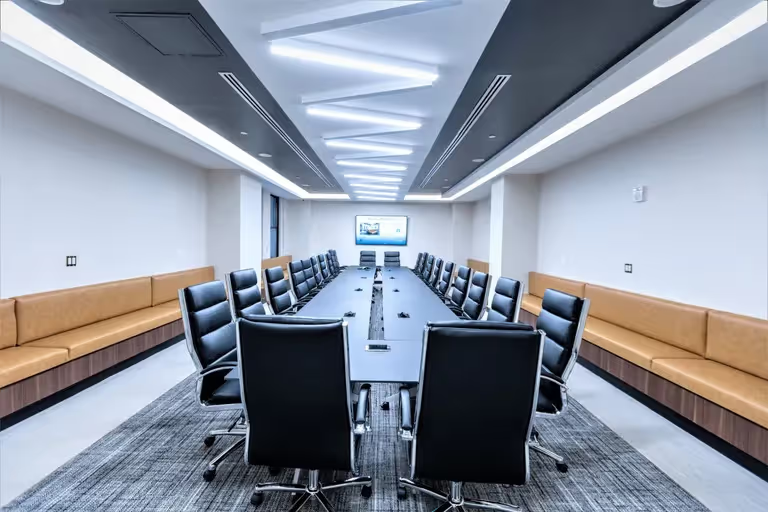
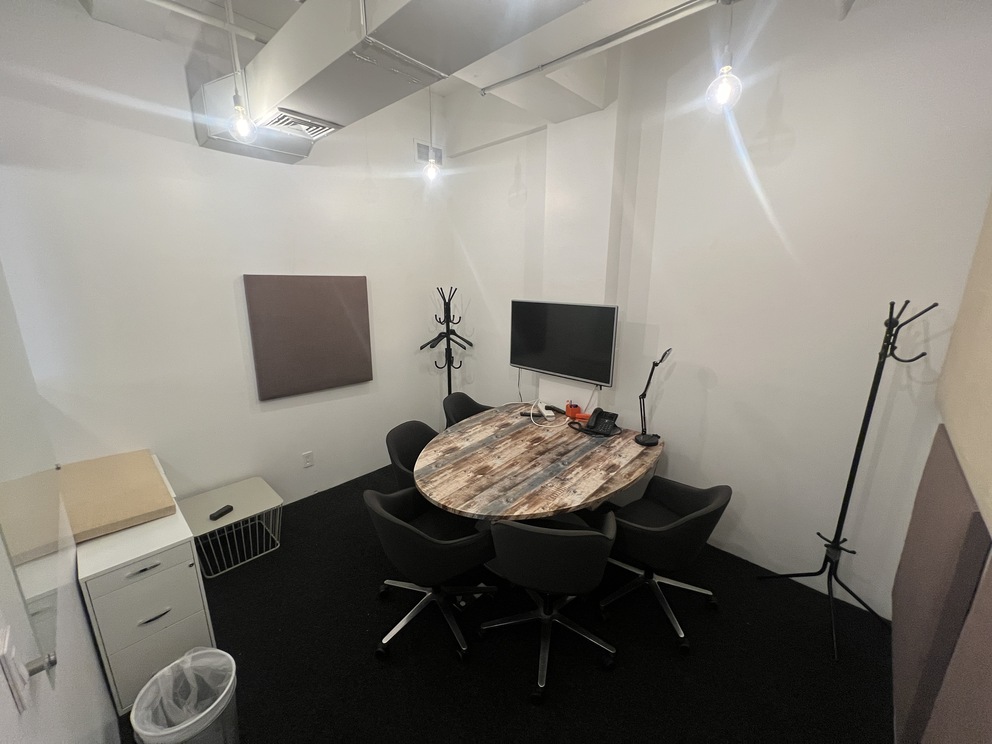
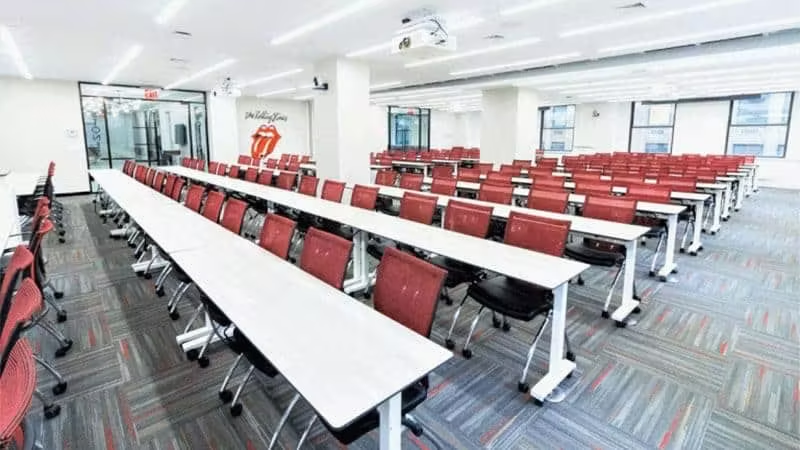
Choose the Right Space
Look for environments that offer:
- Quiet zones
- Collaborative areas
- Flexible layouts
- Good accessibility
Keep It Optional
Mandates reduce engagement. Voluntary participation increases it.
The solution is intentional design, both of the space and the schedule. Block the morning for collaborative work: brainstorms, planning sessions, the problems that benefit from real-time interaction. Reserve the afternoon for focused individual work in quiet zones. This rhythm respects both the collective energy that makes office days valuable and the deep focus that makes people productive.
The “Afterglow Effect”: What Happens Next
The real value of an office day shows up after it ends.
In the following days, teams often see:
- Faster decision-making
- Shorter meetings
- Clearer communication
- Stronger alignment
This is sometimes called “hybrid momentum.”
It’s temporary - but powerful.
Turning One Day Into a Long-Term Advantage
The goal isn’t to return to the office full-time. It’s to identify where in-person work adds the most value.
Different teams will discover different patterns:
- Monthly strategy sessions in person
- Remote daily operations
- In-person onboarding experiences
Some teams will discover that their monthly planning sessions are twice as productive in person but their daily standup works fine on Zoom. Others will find that onboarding new hires requires at least a few shared office days to build the relationships that make remote collaboration possible later. The data from your experiment tells you where to invest your in-person time for maximum return.
The key is to experiment, measure, and adapt.
Final Thought
If your team hasn’t worked together in person recently, don’t start with a policy.
Start with a question:
“What might we rediscover if we spent just one day together?”
Then test it and let the results speak for themselves.
If you're looking for a space to run this kind of experiment without signing a long-term lease, WorkSocial in Jersey City offers flexible office space designed for exactly this purpose: collaborative zones, quiet focus areas, enterprise-grade infrastructure, and direct PATH access to Manhattan. It's worth a look if you want to test what one day together can do for your team.
The teams that thrive in the next decade won't be the ones that picked "remote" or "office" and stuck with it. They'll be the ones that stayed curious enough to keep experimenting.
Collaborative zones, quiet focus areas and direct PATH access to Manhattan in Jersey City, without a long-term lease, so your team can test a day together.


.avif)










.avif)




.avif)
.avif)
.avif)
.avif)